
If you’re getting a dental crown, you’re probably wondering what the process is like. That’s totally normal. The good news is, it’s easier than most people expect. Here in Highland Village, TX, Dr. Drew Moore and the team at Village Periodontics & Implant Dentistry walk patients through each step with a calm, personal approach. Whether it’s your first crown or your third, this guide will help you understand exactly what’s involved from start to finish so you feel confident at every visit.
Dr. Moore isn’t just a highly trained periodontist, he’s also someone who really takes the time to listen. With more than 20 years of experience and a long list of military honors, including the Bronze Star, he’s earned the trust of patients from Chapel Hill to Stafford. He’s known for being thorough but gentle, and people appreciate how he makes even complex procedures feel manageable. That combination of skill and empathy is what makes the experience feel far less intimidating.
Why You Might Need a Dental Crown
Crowns are one of the most common ways to save a damaged tooth. Maybe you had a root canal. Maybe a big filling cracked the tooth over time. Or maybe it’s just worn down and needs extra support to stay strong and functional. A crown acts like a helmet, protecting what’s left and helping you chew without discomfort or risking further damage.
We see a lot of patients from Castleridge, Clearwater Estates, and nearby neighborhoods who want to avoid pulling a tooth. A crown is often the best solution because it keeps your smile intact and your bite stable. And since it’s made to match your other teeth in color and shape, no one will even know it’s there. This approach allows patients to preserve their natural teeth and avoid more invasive treatments like tooth extractions.
Step-by-Step: What Happens During a Dental Crown Procedure
Getting a crown usually takes two visits. At the first one, Dr. Moore will examine your tooth and take X-rays if needed. This helps ensure that the tooth and surrounding bone are healthy enough to support a crown. If everything looks good, he’ll numb the area, gently shape the tooth, and take an impression. This mold goes off to the lab where your crown is custom made based on the shape, size, and bite of your natural teeth.
Before you leave, we’ll place a temporary crown to keep your tooth protected while the permanent one is being crafted. It’s not fancy, but it does the job by maintaining your appearance and function during that short wait. Most people go back to work or school right after because there’s little to no recovery needed. The temporary crown allows you to eat and smile without worry while your final one is being prepared.
At your second visit, the temporary comes off and the new crown is fitted. Dr. Moore will check the color, shape, and bite, making sure it feels just right before cementing it into place. The goal is a crown that feels like it’s always been there. Most patients say it feels like having their natural tooth back again and that chewing, smiling, and talking feel completely normal again.
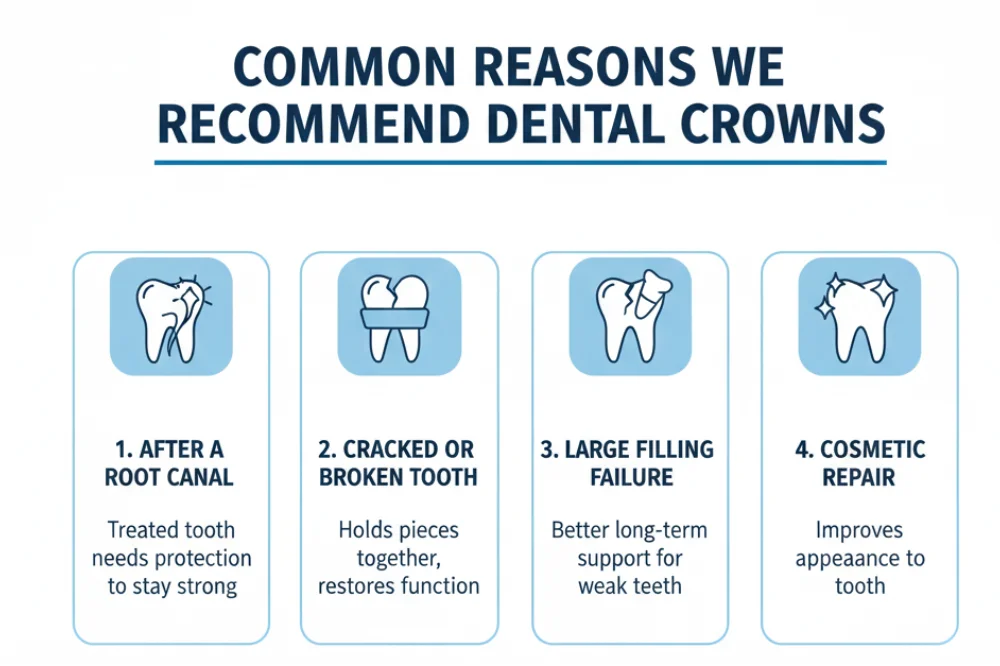
Common Reasons We Recommend Dental Crowns
If you’re wondering whether a crown is necessary, it helps to know some of the situations where it’s typically recommended. Crowns are often the go-to option when a tooth needs support, protection, or a cosmetic fix. Here are a few of the most common reasons Dr. Moore may suggest one:
- After a root canal: The treated tooth becomes more fragile and needs added protection to stay strong.
- Cracked or broken tooth: A crown can hold the pieces together and restore function.
- Large filling failure: When a filling is too big to stay securely, a crown provides better long-term support.
- Cosmetic repair: Crowns can improve the appearance of a discolored or misshapen tooth.
In all of these cases, a crown helps protect what’s left of your natural tooth while restoring your ability to bite and chew. When a tooth is too weak for a filling but still worth saving, a crown offers the perfect balance of durability and aesthetics. In some situations, crown lengthening is needed first to expose enough tooth structure before the crown can be placed properly.
Comparing Temporary and Permanent Crowns
Temporary crowns are like a placeholder. They’re made from lighter materials and only meant to last a couple of weeks. They keep your tooth covered and comfortable but aren’t as strong or lifelike as the final version. Permanent crowns, on the other hand, are built to last. They’re made of durable materials like porcelain, ceramic, or even zirconia, and they’re matched precisely to your natural tooth color.
| Feature | Temporary Crown | Permanent Crown |
| Material | Acrylic or resin | Porcelain, metal, ceramic, or zirconia |
| Durability | Short-term, less durable | Long-lasting, highly durable |
| Appearance | Basic, less color-matched | Custom color-matched to your teeth |
| Purpose | Protects tooth during lab process | Final restoration for function and looks |
| Placement Duration | Worn for 1–3 weeks | Designed to last 5–15 years or longer |
Understanding the difference between the two helps you know what to expect between visits and why both steps matter. The temporary crown is simply a step toward the final restoration. The real payoff comes with the permanent crown that blends beautifully with your natural smile and lasts for years.
What to Know Before and After Crown Placement
Feeling prepared before you get a crown can make the process a whole lot smoother. And knowing what to expect afterward helps you heal comfortably and keep your new crown in great shape. These are some of the key things we talk about with patients in Highland Village before and after treatment:
- Does it hurt? Not during the procedure. We use a local anesthetic to keep you completely comfortable.
- Will it look fake? Not at all. We match the crown’s shade to your existing teeth so it blends in seamlessly.
- Can I eat right away? Yes, but avoid sticky or hard foods until your crown is fully set and your bite feels normal.
- Is special care required? Just treat it like a natural tooth. Brush, floss, and see your dentist regularly.
Once the crown is in place, you’ll be able to talk, eat, and smile just like before. It is also worth noting that patients with active gum disease need that treated before a crown can be placed successfully. Healthy gum tissue is what keeps the crown seated and protected long term.
Taking the Next Step Toward a Healthier Smile
A crown isn’t just about saving a tooth, it’s about restoring comfort and confidence. When you can eat without pain and smile without worry, that’s a win. At Village Periodontics & Implant Dentistry, we’re here to make that happen with care that’s thorough, honest, and personal.
Dr. Moore has helped people all over Highland Glen, Buttercup, and Native Oak Estates feel better about their dental care. If you think a crown might be in your future, give us a call. We’ll walk you through it with no pressure, just support. Schedule your appointment online or call 972-966-2500. Let us help you get your smile back to feeling and looking its best.
Village Periodontics & Implant Dentistry
2820 Village Pkwy Suite 630
Highland Village, Texas 75077
(972) 966-2500
Google CID
Frequently Asked Questions
How long does a dental crown procedure take?
Patients want to know how much time to plan for and how many visits it usually takes.
What they should ask instead: How many appointments and how much chair time should I expect for a crown, and are there any exceptions?
- Immediate Insight: For a traditional crown, most people need two appointments over about 1–2 weeks. Each visit typically takes around 60–90 minutes: the first for prep and a temporary crown, the second for fitting and cementing the permanent crown.
- Supporting Context: At the first visit, your dentist reshapes the tooth, takes impressions or scans, chooses the shade, and places a temporary crown. A lab then fabricates the final crown, which usually takes about 1–2 weeks before your second visit.
- Deeper Implication: Some offices offer same‑day crowns using in‑office milling technology, which can complete everything in a single longer visit, but many practices still follow the two‑visit model.
Do I have to avoid certain foods after getting a crown?
The right (or wrong) foods can affect how well your temporary or new crown holds up, especially right after placement.
What they should ask instead: What food habits protect my crown in the first days and over the long term?
- Immediate Insight: Yes, there are a few smart precautions. Avoid very sticky foods (like taffy, caramels) and very hard items (like ice, nutshells) that can loosen, crack, or pull off a crown, this is especially important while wearing a temporary crown.
- Supporting Context: Dental guidance also recommends waiting to eat until numbness fully wears off so you do not bite your cheek or tongue and can feel your bite accurately; after that, most everyday foods are fine if you chew sensibly.
- Deeper Implication: Treating your crown like a natural tooth, avoiding habits like chewing ice or opening packages with your teeth, goes a long way toward preventing fractures or loose cement.
Will my crown match my other teeth?
People worry a crown will look obvious in photos or when they smile or talk.
What they should ask instead: How closely can my crown match the color and shape of my nearby teeth?
- Immediate Insight: In most cases, yes, crowns are custom‑made to match the shape, size, and shade of your natural teeth, so they blend in when you talk and smile.
- Supporting Context: During the first visit, your dentist selects a shade using a guide and may take photos; the lab designs the crown to align with your bite and neighboring teeth so it looks and feels like part of your smile.
- Deeper Implication: For front teeth or high‑visibility areas, working with a quality lab and, when needed, doing a shade check under natural light helps achieve highly natural‑looking results that most people never notice.
What should I do if my crown feels loose?
A loose crown can usually be fixed easily at first, but can lead to decay, breakage, or loss of the crown if ignored.
What they should ask instead: What steps should I take right away if my crown feels loose or comes off?
- Immediate Insight: Call your dentist as soon as you notice looseness or if the crown comes off. Avoid chewing on that side until it is checked so you do not crack the crown or damage the tooth underneath.
- Supporting Context: Professional guidance warns against gluing a crown back on with household products; your dentist can usually clean the area and recement or replace the crown properly, protecting the tooth from decay and sensitivity.
- Deeper Implication: Quick attention often turns a simple recementing appointment into an easy fix, waiting can mean needing a new crown or even more extensive treatment if the tooth is exposed for too long.