
Trying to decide which dental crown is right for you in Highland Village, TX? You’re definitely not alone. There’s a lot to weigh, how it looks, how long it’ll hold up, and how much you’re willing to spend. This guide breaks it down in plain English and helps you understand the differences clearly. Whether you’re leaning toward porcelain, metal, ceramic, or resin, we’ll help you feel more confident in your choice. And don’t stress. Dr. Drew Moore and the team at Village Periodontics & Implant Dentistry are ready to help you sort through it all.
Dr. Moore isn’t your average dentist. He’s a board-certified periodontist with more than 20 years of hands-on experience. He also served in the military and earned honors like the Bronze Star, which speaks to his discipline and dedication. People around Highland Village know him for being both technically skilled and genuinely caring. When it comes to your smile, he’s someone you can count on to offer honest advice and precision care.
Porcelain, Metal, Ceramic, or Resin: What’s the Difference?
Not all crowns work the same way, and the right one for you depends on where your tooth is, how much you use it, and what kind of appearance you want. Some people want something that blends in seamlessly, while others prioritize durability. Each crown material has its own advantages and trade-offs.
- Porcelain crowns are a great match for front teeth because they mimic natural enamel really well. They’re your best bet if you want something that blends in beautifully with your existing teeth. Just know they’re not as tough as metal options, and they can cost a little more than resin or ceramic.
- Metal crowns are the heavy lifters of the group. Made from gold or strong alloys, they’re ideal for back teeth that do a lot of chewing. They’re incredibly durable and last for many years, but they’re also shiny and noticeable, which makes them less ideal for front teeth.
- All-ceramic crowns are a solid metal-free alternative that still looks natural. If you’ve got a metal allergy or just want something that blends in well, ceramic is a good option. They work well almost anywhere in your mouth, though they may not be the best choice for heavy grinders or patients who clench their teeth.
- Resin crowns are usually the most budget-friendly and fastest to get. They’re often used as temporary fixes or when cost is a concern, especially if you’re looking for a quick, low-cost solution. The trade-off is they wear down faster and don’t last as long as other materials, so they’re often a short-term option.
Whether you’re in Castleridge, Buttercup, or Creekside, think about how visible the crown will be and how much pressure that tooth usually takes. That’ll help you make a smart decision that balances function, aesthetics, and cost.
Comparing Dental Crown Materials
To make things even clearer, here’s a simple chart that compares the major pros and cons of each crown type. This chart can help you quickly understand which option might make the most sense for your needs.
| Type | Pros | Cons |
| Porcelain | Looks natural, blends with teeth | Can chip, more expensive than resin |
| Metal | Extremely durable, great for chewing surfaces | Very noticeable, not ideal for front teeth |
| All-Ceramic | Natural appearance, metal-free, allergy-friendly | Less durable under heavy bite pressure |
| Resin | Budget-friendly, quick to place | Less durable, wears out faster |
You can use this table as a quick reference when discussing your options with your dentist. It’s not everything you need to know, but it gives you a solid starting point for asking better questions.
How to Choose the Right Crown for You
There’s no universal answer for which crown is best. What works well for someone in Highland Shores might not be right for someone in Chapel Hill. Your ideal crown depends on where it’s going in your mouth, how you feel about appearance versus function, and how much you’re ready to spend.
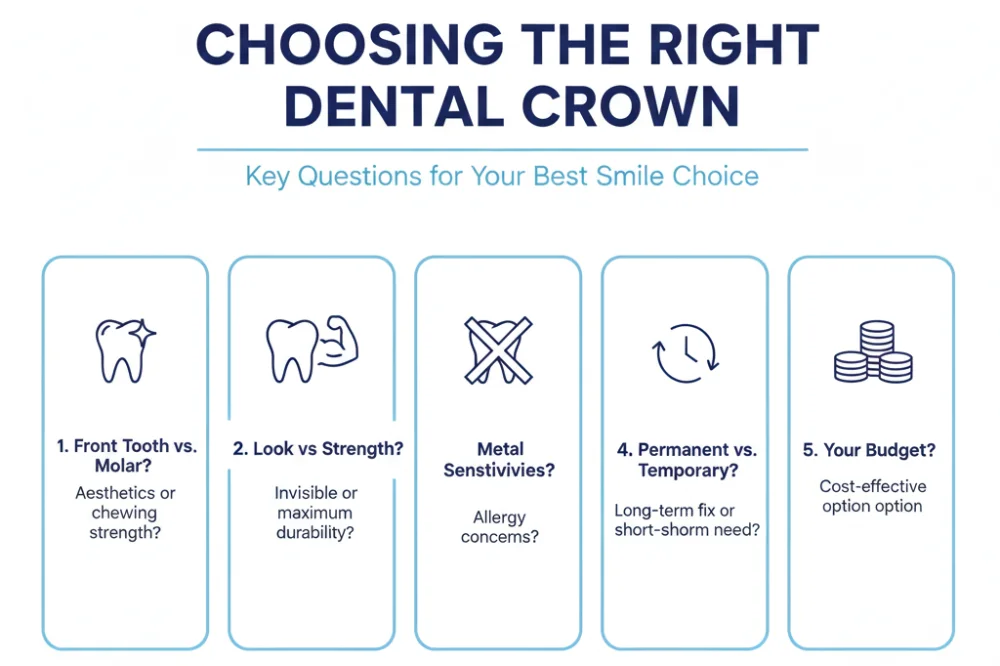
Start by thinking through some simple but important questions. Ask yourself if this crown is going on a front tooth where aesthetics matter most, or a back molar where chewing strength is key. Consider if you have any metal sensitivities and whether you’re aiming for a long-term fix or just a short-term solution for now.
- Is this crown for a front tooth or a molar?
- Do I want it to be invisible, or is strength more important?
- Do I have any sensitivities to metal?
- Do I need something permanent or temporary?
- What’s my current dental budget?
Don’t worry if you don’t have all the answers yet. Dr. Moore will walk you through each point during your appointment so you can make an informed decision without feeling overwhelmed. His goal is to make sure you understand your options and feel confident about your treatment plan.
What Happens During a Dental Crown Procedure?
Not sure what actually happens when you get a crown? It’s pretty simple and more routine than most people expect. Most of the time, the process takes two appointments from start to finish. At the first visit, the dentist will prep and shape the tooth, take impressions, and place a temporary crown so your tooth stays protected while the permanent one is being made.
Then the lab takes about two weeks to craft your permanent crown. This crown is designed to match your other teeth in shape, size, and color. Once it’s ready, you come back in for your second visit. The dentist will check the fit, make sure the color matches, and cement it into place. If anything feels off, they’ll tweak it so it fits comfortably and functions just like a natural tooth.
How to Make Your Crown Last Longer
Even though crowns are made to last, they still need care. The good news is, it’s nothing complicated, just the same healthy habits you should already be doing. Think of your crown like a regular tooth: the better you treat it, the longer it’ll last, and the fewer problems you’ll run into.
Brush twice a day using fluoride toothpaste and floss gently, especially around the base of the crown to avoid plaque buildup. Try to avoid biting down on things like ice, hard candy, or pen caps, which can damage even a well-made crown. And if you tend to grind your teeth at night, wearing a nightguard can really help preserve your dental work and prevent fractures.
Regular checkups matter too. Patients with a history of gum disease need to be especially consistent about maintenance visits because inflammation around the gumline is one of the most common reasons crowns fail early. Your dentist can spot early signs of wear or small issues before they turn into big problems, so your crown can last as long as possible without needing repairs or replacements.
Taking the Next Step Toward a Stronger Smile
You don’t need to figure all this out by yourself. At Village Periodontics & Implant Dentistry, we’re here to help you choose the crown that actually fits your life. Whether you’re concerned about appearance, durability, or budget, we’ll help you find something that makes sense for you and your dental goals.
Dr. Drew Moore has guided people from Highland Glen, Native Oak Estates, and all across Highland Village toward the right solution for their smile. From start to finish, you’ll get answers, not pressure, and a plan that respects your time and budget. Ready to move forward? Schedule your consultation online or call 972-966-2500. We’d love to help.
Village Periodontics & Implant Dentistry
2820 Village Pkwy Suite 630
Highland Village, Texas 75077
(972) 966-2500
Google CID
Frequently Asked Questions
What is the best type of dental crown for front teeth?
Front teeth sit in the “smile zone,” so most people care as much about appearance as strength.
What they should ask instead: Which crown materials give me the most natural look and gum-friendly result on my front teeth?
- Immediate Insight: All‑porcelain or all‑ceramic crowns are usually the top choice for front teeth because they can closely match your natural tooth color and translucency, are metal‑free, and do not show a dark metal line at the gum over time.
- Supporting Context: Dental resources note that modern ceramics (like porcelain and zirconia‑based options) are strong enough for everyday biting on front teeth while providing superior esthetics compared with metal or porcelain‑fused‑to‑metal in this area.
- Deeper Implication: Your dentist will look at bite, habits (like grinding), and cosmetic goals to choose between specific ceramic options, but for front teeth, a tooth‑colored, metal‑free crown is usually ideal for both appearance and gum health.
How long do dental crowns typically last?
Longevity affects cost, planning, and expectations.
What they should ask instead: How long can I expect different crown materials to last with normal use and good care?
- Immediate Insight: Most crowns last about 5–15 years, and many last longer with excellent home care and regular dental visits.
- Supporting Context: Mayo‑ and WebMD‑aligned sources report that metal and some ceramics (like zirconia) tend to have the longest lifespans, while all‑resin or lower‑cost options may wear or chip sooner and need earlier replacement.
- Deeper Implication: Daily brushing, flossing, avoiding very hard or sticky foods on crowned teeth, and wearing a nightguard if you grind can significantly extend how long your crown stays comfortable and intact.
Are metal crowns safe?
Patients sometimes worry about metal in their mouth, allergies, or long‑term safety.
What they should ask instead: When are metal crowns a good choice, and how do we handle metal sensitivities?
- Immediate Insight: Yes, metal crowns (like gold or high‑noble alloys) have been safely used for decades and are known for exceptional strength and longevity, especially on back teeth.
- Supporting Context: Health agencies and dental organizations consider them biocompatible for most people; if you have a known metal allergy or sensitivity (for example to nickel), your dentist can select ceramic, porcelain, or specific hypoallergenic alloys instead.
- Deeper Implication: For molars where appearance matters less and chewing forces are highest, metal can be an excellent, long‑lasting choice, while front‑tooth and allergy‑sensitive cases often lean toward ceramic options.
Can I eat normally with a dental crown?
People want to know how “normal” life will feel once the crown is in place.
What they should ask instead: What food habits should I keep or change once my crown is fully set?
- Immediate Insight: After the crown is fully cemented and feels comfortable, you can generally eat most foods as you would with a natural tooth, including normal chewing on that side.
- Supporting Context: Dental guidance recommends avoiding very sticky candies, chewing ice, or biting hard objects (like pens or nutshells) to reduce the risk of chipping or loosening the crown, similar precautions to what’s advised for natural teeth.
Deeper Implication: Treating your crown like a natural tooth, good hygiene, sensible food choices, and regular checkups, protects both the crown and the tooth underneath, maximizing comfort and lifespan.